Don’t visit a 55+ community without doing this first
Got it — let’s turn it into a real blog, not a choppy list.
3 Things That Matter The Most When Choosing Where To Retire in Arizona
If you’re thinking about retiring in Arizona, you’re probably already dreaming about the sunshine, the golf carts, the palm trees, and the fact that you’ll never shovel snow again. All of that is real. But the people who are happiest with their move here didn’t just close on a house and hope for the best — they thought through a few key pieces of the puzzle before they made the leap.
After helping hundreds of people relocate and retire in Arizona, I can tell you this with total confidence: the people who thrive here long-term usually got three big decisions right:
Where they live
How they handle healthcare
How easy it is to get in and out of the state by air
Those three things shape your day-to-day life far more than granite counters or a pretty view ever will.
Let’s walk through each of them in a way that actually reflects what life in Arizona feels like — not just what it looks like on a brochure.
1. Where You Live: It’s About Lifestyle First, Floor Plan Second
When most people start Googling “retire in Arizona,” they head straight to the real estate listings. That’s understandable — everything is sorted neatly by price, size, and city, and you can scroll yourself into a trance.
But here’s the truth: the address you pick is really a stand-in for something bigger — your daily lifestyle.
Are you picturing yourself in a 55+ community with pickleball, happy hours, and neighbors your same age? Or do you see yourself in a regular neighborhood, walking to restaurants, coffee shops, maybe a farmer’s market on Saturdays? Do you want golf carts and clubhouses, or art galleries and daytrips?
Arizona lets you have almost any version of retirement you want. That’s a blessing and a trap, because if you don’t get clear on who you are and how you actually live, it’s very easy to end up in the wrong place.
55+ Community… or Not?
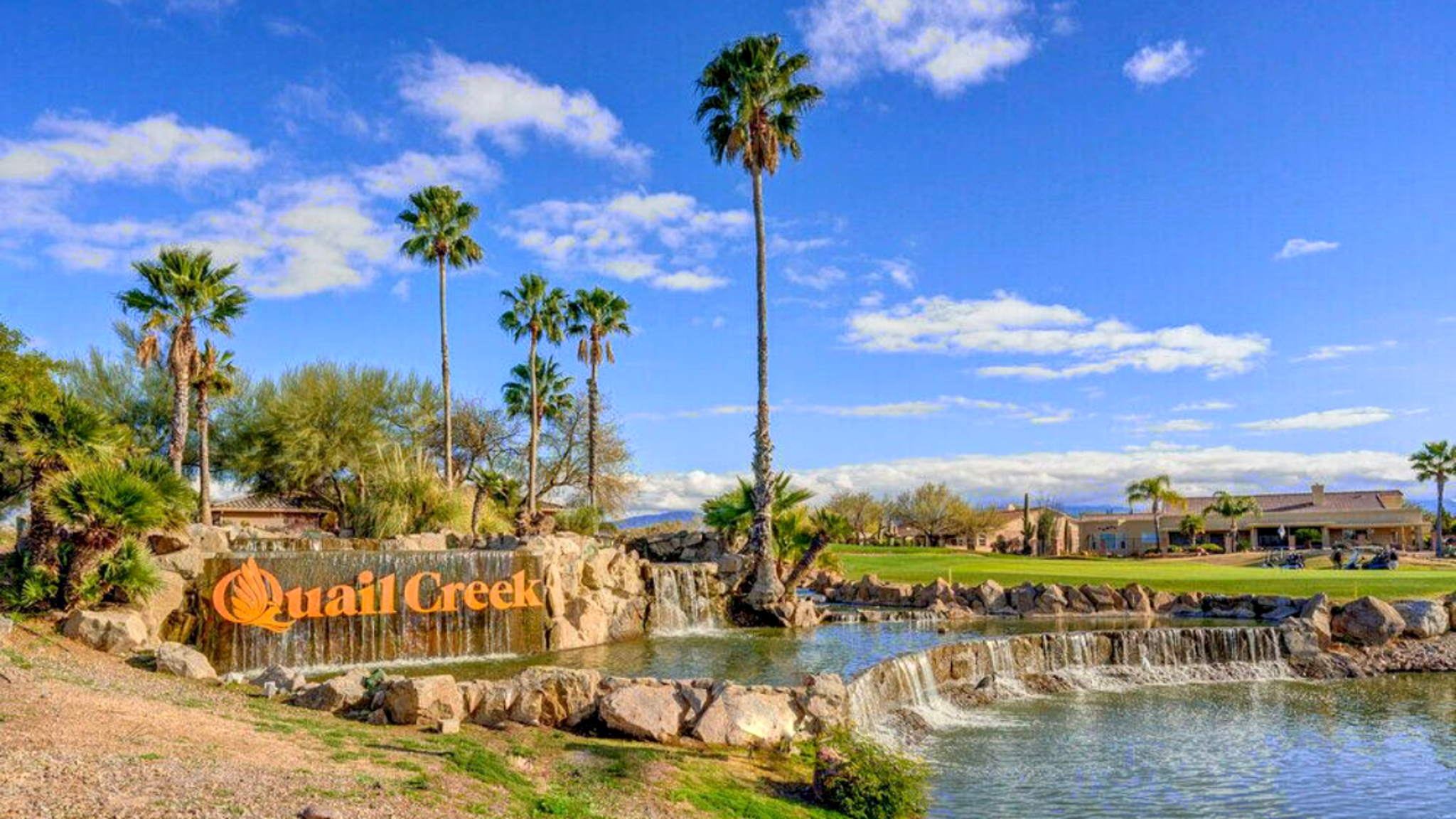
For a lot of people, a 55+ community is exactly what they had in mind when they started thinking “Arizona retirement.” Those communities are built for your life stage: social clubs, activities, events, golf, swimming, fitness classes, craft rooms, card rooms — you name it. You’re surrounded by people on similar schedules, with similar priorities.
Inside those communities, the pricing can range from modest to “I didn’t know that many zeroes existed.” You might have a small condo in a classic place like Sun City under $200,000, or a stunning golf-course home with a pool and all the upgrades over a million. Very often, both exist inside the same community. So don’t write an area off just because you see one big number. Look at the range.
On the flip side, some people want nothing to do with age-restricted living. They want mixed ages, babies in strollers, teenagers on skateboards, and the sense of being in the “regular world.” Maybe they want to be near restaurants, shopping, live music, art walks, or a walkable main street.
That’s where places like Old Town Scottsdale, parts of central Phoenix, or character-heavy areas like Carefree and Cave Creek start to come into focus. They’re not 55+ — but they can be fantastic retirement hubs if you feed off that energy.
The point is simple: start with the lifestyle you want, then look for the real estate that supports it — not the other way around.
The “Smaller House, Bigger Life” Model
There’s another trend I see more and more: people deliberately choosing less house so they can have more life.
Instead of buying a showpiece as their “one last big home,” they buy:
A smaller single-family home or villa in a 55+ community
orA compact house or condo in a great non-age-restricted area
Then they use it as a home base.
In the summer, they head to the mountains or back to their original state for a few months. In the colder months, they’re here in Arizona — playing golf, seeing friends, using the amenities, and flying off to other destinations when they feel like it. The house is there for them, but it doesn’t own them.
If you’ve always imagined retirement as a time when you’re finally free to travel, this model is worth thinking about. A “lock-and-leave” type home — especially in a community where the exterior is maintained for you — can make it very easy to drop everything and go.
How Big Do You Really Need?
This is where I’ll be blunt: a huge percentage of retirees overestimate how often their kids and grandkids will visit.
I cannot tell you how many times I’ve heard some version of:
“We bought the bigger model so everyone could come for holidays… and now the guest rooms just sit there.”
Your kids love you. They also have jobs, school schedules, sports, and lives of their own. They’ll come — but probably not as often or as long as you’re picturing when you’re staring at that floor plan with the massive second primary suite.
So be honest with yourself:
Is your life going to revolve around hosting and entertaining large groups often?
Or do you like the idea of it more than you’ll like washing the dishes afterwards?
There is nothing wrong with buying a home that can handle big gatherings if that genuinely lights you up. Just don’t sacrifice your day-to-day comfort (and money) for guest rooms that will see more dust than relatives.
A well-designed smaller plan in a community you love will beat a too-big house in the wrong spot every time.
Beyond 55+: Other Arizona Vibes
Not everybody wants golf carts and HOA meetings. Maybe you want something that feels more “Arizona” in the classic sense — Western storefronts, desert vistas, small-town charm.
That’s where towns like Carefree and Cave Creek come in. You get the cactus, the mountains, the quirky shops, local restaurants, farmers markets, and a little Wild West flavor. It’s a different price point — often higher than many 55+ communities — but for the right person, the lifestyle is worth every penny.
Or maybe you’re allergic to 115-degree days and you really mean it when you say you want four seasons. In that case, northern Arizona towns like Flagstaff or Payson can be part of your plan. Some people buy there full time; others keep a home in the Valley and use a place up north as a summer escape.
The point is not “this city is better than that city.” The point is: be brutally honest about how you like to live on a normal Tuesday, and work backwards from that.
2. Healthcare: The Boring Topic You Can’t Afford to Ignore
The second big piece almost nobody wants to talk about is healthcare.
Everybody loves browsing floor plans.
Nobody loves thinking about doctors, networks, and lab work.
But here’s the reality: as you age, you will interact with the healthcare system more — even if you’re healthy. It’s like routine maintenance on a car. You may not need a full engine rebuild, but you definitely need oil changes and brake checks.
Arizona — especially the Phoenix metro area — is flush with healthcare. You’ll see hospitals going up everywhere, urgent care on every corner, and major health systems competing for space. That’s the good news.
The part that takes some intention on your part is how you plug into that system.
Get Into a Network Before You Need It
Once you move, it’s tempting to focus on paint colors and patio furniture and tell yourself you’ll find a doctor “later.”
Don’t do that.
Once you’ve unpacked your kitchen and found your laptop charger, your next move should be:
Identify a health network you want to be part of.
Use their website or call center to schedule a new patient appointment with a primary care doctor close to your new home.
Have your medical records sent over.
That way, when something pops up — and it will — you’re already in the system. You’re not out there with a sore throat or chest pain trying to become a brand-new patient in the middle of a mini crisis.
Once you’re established, that primary care provider becomes your gateway to:
Cardiology, if you develop heart symptoms
Dermatology, which is a big one in our sun-soaked state
Orthopedics, if your joints start complaining
And every other specialty you might need
Being “in network” is worth more than people realize… right up until they find out the hard way what it’s like to be outside it.
Don’t Forget to Check Your Insurance First
Before you ever get to the stage of picking a health network, you need to make sure your insurance actually plays well with Arizona.
If you’re still on an employer plan or a state-based plan, it might be very localized to your current area. If you’re on Medicare, you need to make sure your supplement or Advantage plan covers the doctors and networks you’re likely to use here.
This is not something you want to sort out after you’ve already moved. Part of your retirement prep should be:
Understanding where your current coverage works
Finding out what needs to change if you relocate
Making those changes deliberately, before you end up in a new state with an old plan that doesn’t travel well
It’s not glamorous, but it’s part of building a retirement life that doesn’t fall apart the first time you need an MRI.
Healthcare in Daily Life
The good news is that once you’ve chosen your coverage and gotten into a network, Arizona’s healthcare system can actually feel surprisingly user-friendly.
Getting a next-week appointment instead of a three-month wait time is fairly common. Online portals make it easy to schedule, view lab results, and message your care team. In many areas, you get a real sense that healthcare is built into the community — not something you have to drive an hour for.
But that experience doesn’t happen by accident. It happens because you planned for it instead of assuming “we’ll just figure it out later.”
3. Airports: The Invisible Factor That Shapes Your Retirement
The third thing that quietly shapes your retirement life in Arizona is the airport situation.
You might not care much about this when you’re scrolling through home photos, but once you’re actually here, it becomes very real very fast.
Think about what’s going to happen after you move:
Friends and family will want to come see your new life.
You’ll want to visit them — especially if your kids and grandkids are out of state.
At some point, you’ll want a vacation that doesn’t involve I-10.
All of that runs through one practical question: how easy is it to get from your new home to the rest of your world?
Phoenix vs. Tucson in Practical Terms
Arizona gives you two main commercial airports: Phoenix Sky Harbor and Tucson International.
Tucson is a perfectly good airport with solid domestic connections. If you’re planning to primarily visit other US cities, you can do that from there without too much trouble. For international trips, you’re typically looking at a connection through another US hub.
Phoenix Sky Harbor is bigger and busier — but it also gives you a lot more options, including:
Multiple daily nonstops to major US cities
Direct flights to several international destinations
Long-haul routes like the nonstop to London
If you’re the kind of person who travels a lot, or if your kids and grandkids are scattered around the country, this matters. It’s the difference between one connection or three. It’s the difference between a simple nonstop versus a “Let’s pray we make this connection in Chicago in February” situation.
Test-Drive the Routes Before You Commit
One easy way to sanity-check this before you decide where to live is to “test drive” some routes online.
Go to one of the major airline websites.
Enter the airport where your kids live, or a city you visit all the time.
See how many flights it takes to get to Tucson.
Then see how many to get to Phoenix.
If the path to one city is simple and the other looks like a scavenger hunt involving three layovers and a prop plane… that tells you something.
Do the same thing for your favorite international destination if you love to travel abroad. If you can leave Phoenix at night and wake up in London without dealing with connections, that’s a big quality-of-life upgrade if you love Europe.
Getting To and From the Airport From Your Community
The other piece of airport life is how you actually get there from your home.
In a lot of 55+ communities, there are residents who run informal airport driving services. They live in the community, they know the drill with the gate, and they’ll take you at four in the morning without complaining because that’s literally their side gig.
That means:
You don’t have to park at the airport for a week.
You don’t have to trust a random rideshare at an absurd hour.
You can keep your car at home and still travel comfortably.
And if you’re the entrepreneurial type who likes a side hustle? Becoming the “airport driver” for your community is a valid little retirement cash flow. It’s pocket money with a social element built in.
The Bigger Picture: Retirement Is More Than a House
If there’s one idea I want you to walk away with, it’s this:
Retirement in Arizona is not just a real estate transaction.
Yes, the house matters. Yes, the community matters. But your long-term happiness here is built on a bigger framework:
A location that matches how you actually live, not the fantasy version of yourself.
A healthcare setup that supports you when you need it — without drama.
A level of airport access that makes it easy to keep your relationships and your sense of adventure alive.
You already have a financial plan for retirement.
What most people don’t have is a retirement life plan — someone to help them think through the day-to-day realities of where and how they’re going to live this next chapter.
That’s where my team and I come in.
We don’t just unlock doors and point at granite like it’s 2004.
We help you think through:
Whether a 55+ community really fits your personality
Which parts of the state match your lifestyle and health needs
How your kids, grandkids, and travel habits fit into the equation
And then we help you find the actual home that slots into that bigger picture
If you’re serious about retiring in Arizona — not just buying a house here, but building a life here — let’s talk. We’ll take everything you’ve been thinking about, everything you’re worried about, and turn it into a clear plan that actually makes sense.
Then we go find the property that supports it.
That’s how you end up not just owning a home in Arizona…
but being genuinely glad, 5, 10, 15 years from now, that you chose this state and this life.